I noticed something right away when I raced in Charleston Race Week for the first time this year: so many men. It was the largest regatta of my sailing career, and there was an overwhelming presence of men – and equally underwhelming presence of women. The ratio was way, way off from my typical regatta affair. Surrounded by professional sailors, I thought maybe this observation could be chalked up to a level of competition I had never experienced. Maybe it was something else that made the lack of women much more obvious than usual. Anyway, I felt embarrassed.
It was embarrassing to me sailing had such pathetic norms that this was a representation of the American racing class. It was disappointing.

I’ve been immersed in sailing since the age of 8, and I was 11 when my mom dropped me off at summer sailing school at Chicago Yacht Club. I raced dinghies off and on for years before committing to college sailing. But I really only started taking note of the experiences of women in sailing a few years ago after I was consistently racing larger keelboats following college. In one of my first big-boat regattas, a woman – the only female skipper in the Chicago J105 fleet – told me when she drove into new ports, including Mackinac Island, she was heckled as she docked, as though she wasn’t experienced enough to man her own ship safely and easily after crossing Lake Michigan.
I’ve gotten the comments, too. One boat owner and skipper who asked me to sail jokingly advised me I “don’t even have to sleep” with him to get on the crew. On a phone call with a boat that had a potential new spot for me, the owner told me I probably wasn’t strong enough to handle the main sail. He’d never met me. Another time a race committee member told me CYC was still very much a “boy’s club” and there wasn’t much she could do after an incident with a non-member left me injured. Founded in 1875, my yacht club has never had a woman as its commodore. But, hey, at least we women are allowed in all of CYC’s bars and club rooms (looking at you, Charleston).
This summer, a long-time friend from childhood whom I met at sailing school complained for hours after he came second to me and my all-women crew in a regatta. His disappointment came from the shock of not beating me, stating multiple times he “couldn’t believe” my team was fast and he “let me win” after deciding not to slam on top of my boat in a leebow maneuver during one race. The incessant complaints as our teams celebrated together were annoying, to say the least. But I’ve sailed with him on larger yachts as crew and never heard the same sentiment as we placed 4th, 8th, or last.
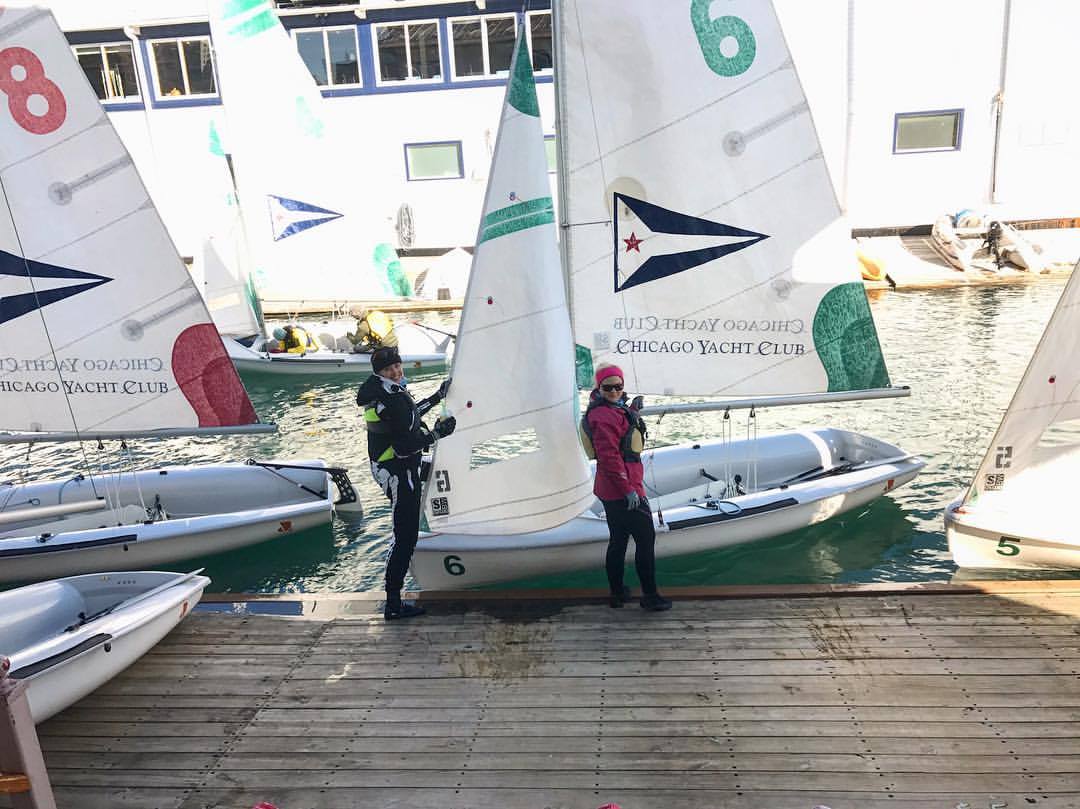 Beyond outright sexism, there are other undertones of male dominance that impact female sailors. I won’t even get into the issue of mansplaining. Crew placement is a great example. While new crew on a boat often take the lower-tier positions, even relegated to rail meat, women shoulder these roles more frequently. Prime example: My female tactician typically takes on a squirrel position when she races on other boats, and she won our women’s team a regatta this summer. No doubt, most believe this is not conscious and based on strategy (weight placement, athleticism, experience), but taking a quick look at crews in a race puts the issue in plain sight. There are simply fewer women who are skippers or main trimmers or tacticians. Even on a boat where half the crew are women, these back-of-the-boat positions are resoundingly dominated by men. There are women there, to be sure, but they are exceptions purely by the numbers.
Weight limits themselves can be inherently favorable to men. For a mixed crew to reach optimized weight in a competitive regatta, having three or four men makes the most sense for many boats because men are heavier, leaving women of average weight with fewer available positions outright. Match racer Pearson Potts recently touched on this, arguing that to make sailing more fair for women, regatta organizers who proclaim to offer “open” regattas should adjust weight limits or even mandate a men-to-women ratio. This isn’t extreme when thought is given to the experience of women in sailing, but for some, that answer is unfathomable (look in the article’s comment section urging women to “earn” a spot and “quit whining”). Fortunately, this experience-based idea sprouted from a male sailor with numerous accolades, giving me hope the issue is already visible to young men in the sport.
I even find a problem with college sailing curriculum, which offers fleet racing in the fall season and team racing in the spring. However, that’s only true for the co-ed team. The women’s team, where I played ball as a driver, mostly continues to fleet race throughout the year. When it came to the spring season, I had little incentive to work on team racing maneuvers and plays knowing I was heading to New Haven or Boston the next weekend to fleet race. I missed out on learning those skills because my coaches instead had me crew or participate less in the team race practices during spring season. I saw the boys younger than me improve rapidly over the season, eventually outpacing me on boat handling by the end of the year. I got left behind, in a sense, and part of that was my own fault. I had another spring goal to crack the national college rankings by competing hard on the East coast, and while our women’s team accomplished this, we lost out in other skills-building ways. I don’t know how to fix this problem, but a simple answer is to promote more team race events exclusively for women or mandate a women’s team ratio in co-ed events.

I don’t place the blame of this culture on anyone. For many, sexism as a topic is taboo, and therefore dismissible. For others, it is easy to refute sexism in sailing with misplaced reverse sexism. It is also easy to point to a women’s team that is killing it or mention a supremely talented female skipper. But those responses are inadequate and do not mean the experiences in sailing are equal based on sex.
My solution over the years has been to race with the people who have never (to my knowledge) sexually objectified me, value me as a sailor by placing me in a high-value position, listen to my tactical advice, and, preferably, have another woman on board. Of course, my favorite solution is to charter my own boats when affordable and stack the crew with talented women who want to learn and need time in the tougher positions.
I believe it is critical to have a women’s team presence in every regatta or racing series – at any level – and that this visibility will help combat the deeply rooted problem of sexism in sailing. It is good for men – young and old – to be out-sailed by women, because only when that experience doesn’t feel like a shock will the sport of sailing be more equal.




 The Baxter Brief
Leave a comment